Car Bottom Furnace Annealing Large Workpiece - Industrial-Grade Heat Treatment Solution for Heavy Components
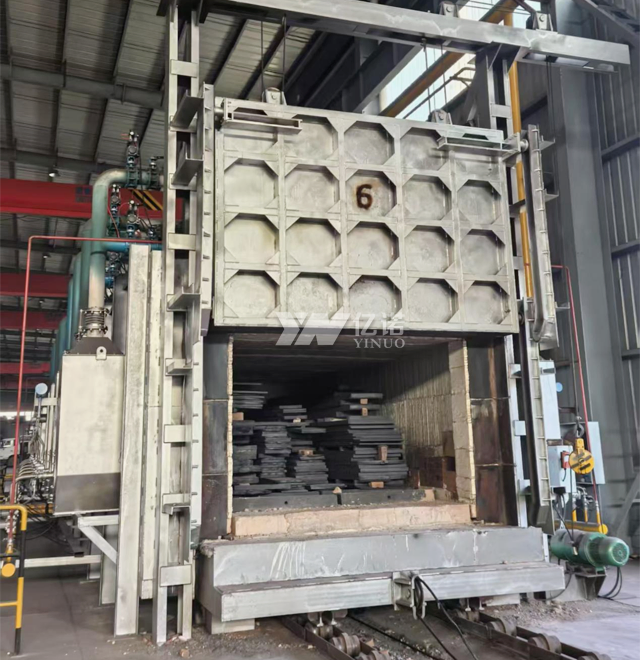
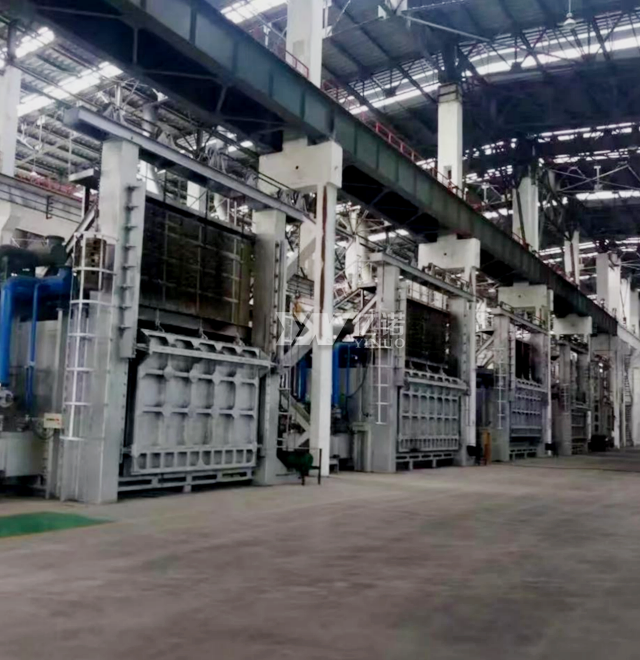
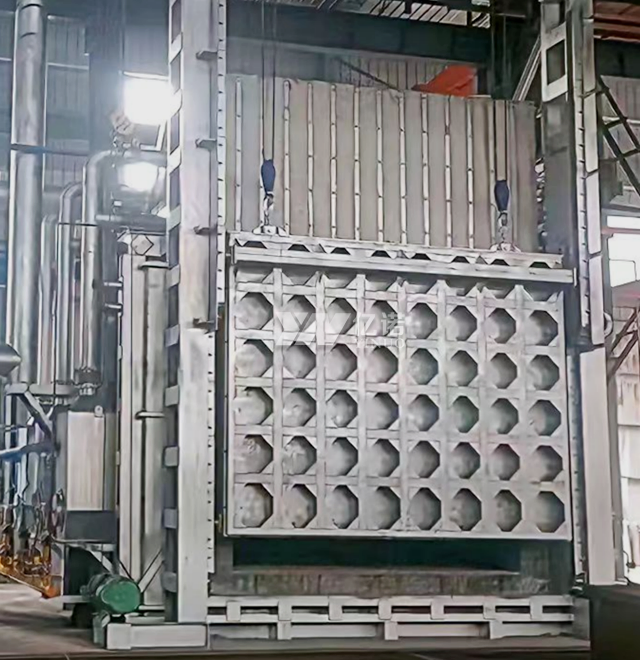
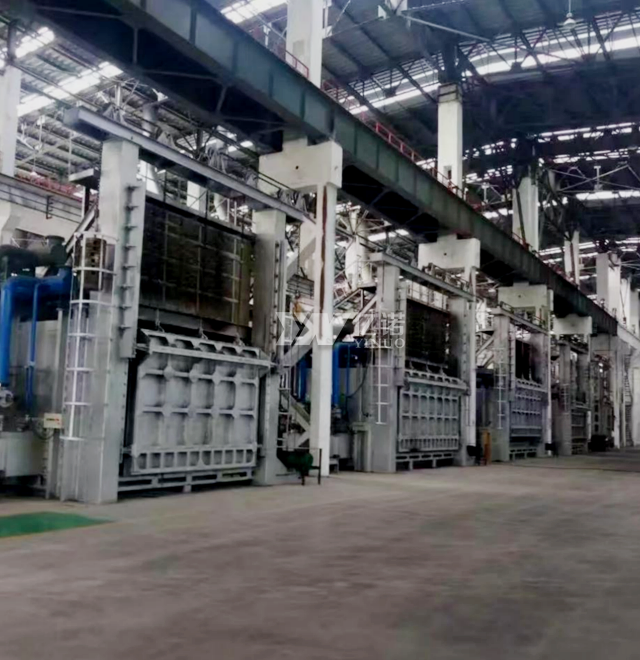
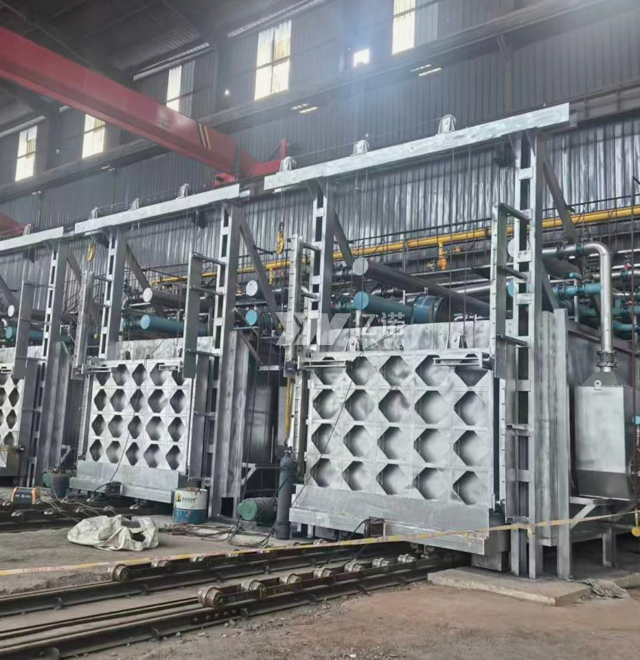
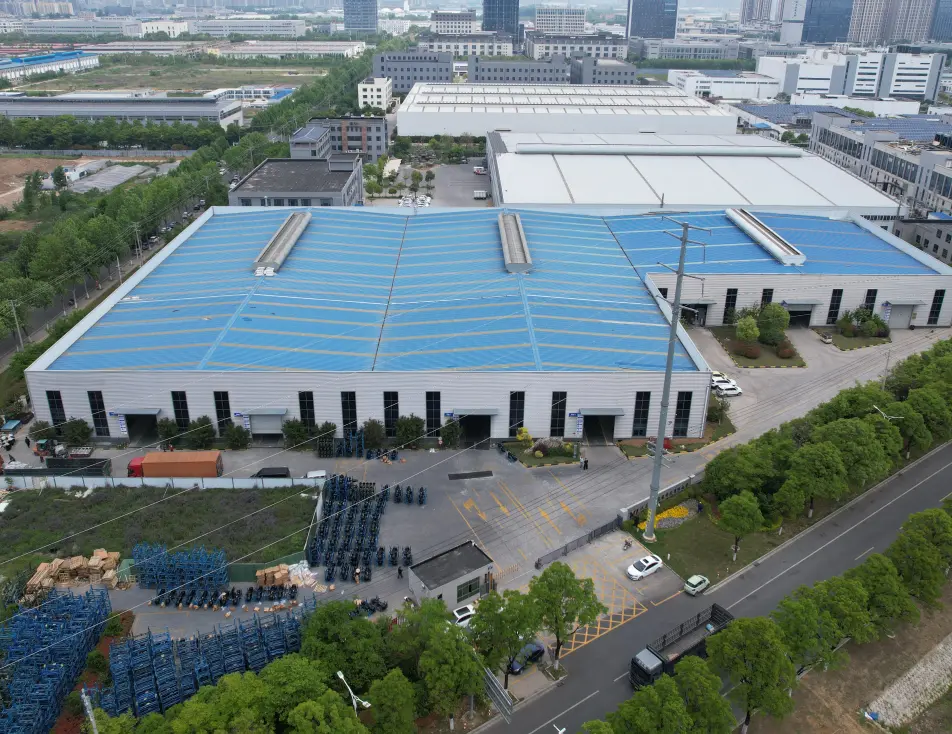
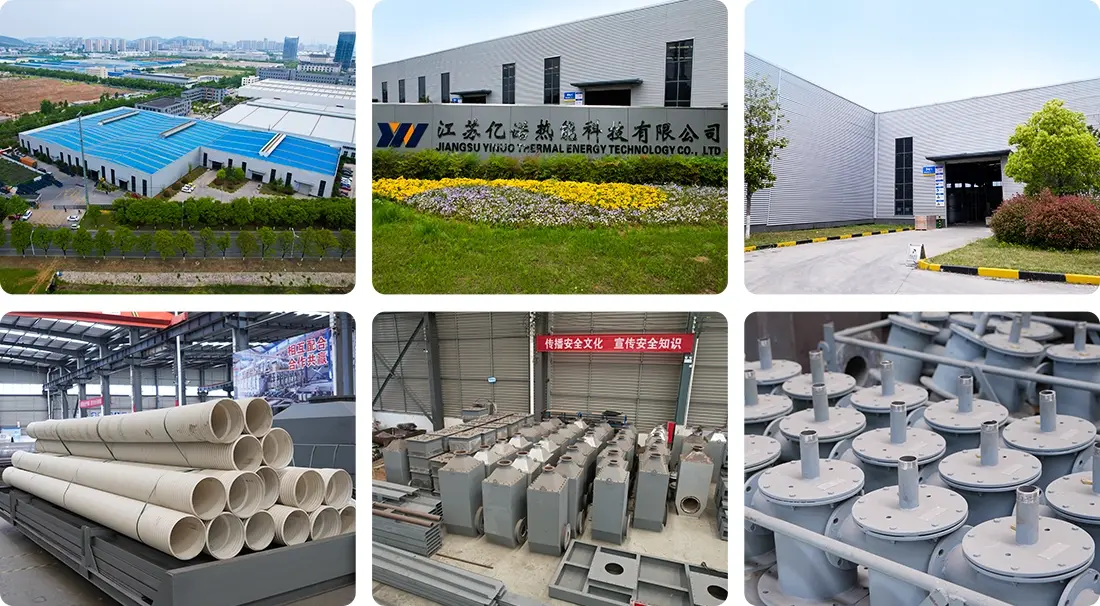
JIANGSU YINUO THERMAL ENERGY TECHNOLOGY CO., LTD manufactures gas-fired bogie hearth furnaces. Stress relief annealing of oversized metal parts is what they are built for. Our Car Bottom Furnace Annealing Large Workpiece solution gives you a furnace chamber you can customize, lined with 350 mm of refractory fiber. Temperature holds within ±2℃. After 1-hour heat preservation, heating zone uniformity stays at ≤±8℃. A standard run sits at 550℃, and capacity can be adjusted up to 950℃. Multi-ton forgings, castings, and weldments all move through on a motorized bogie design. Production space totals 20,000㎡, and more than 100 technical professionals work here. We handle the whole engineering job, from design to commissioning. Marine builders use it. So do energy plants and heavy machinery makers.
What Makes Our Car Bottom Furnace Ideal for Large Workpiece Annealing?
The bogie hearth design is a solution to some of the key issues in thermal processing of huge components. Heavy industrial items such as turbine rotors, crusher housings and marine crankshafts are often too big or too heavy for conventional furnaces.
We have a refractory lined car that rolls straight into the heating chamber and eliminates the risk of manual handling. The self-propelled hearth, driven by a chain, moves at 5–7 m/min, allowing the workpiece to be fully extended outside the furnace for safe loading.
Uniform temperature of big volume avoids distortion in machining. Multi-zone independent control and switchable pulse combustion provide consistent heat penetration throughout thick cross sections. This relieves residual internal strains causing dimensional instability under service circumstances.
The 350 mm fibre liner provides very good heat insulation. The temperature rise of the furnace shell is less than 45℃ on the top and 40℃ on side walls at the working temperature of 950℃. The energy consumption is reduced by 25–62% compared with conventional systems.
Technical Specifications
| Parameter |
Specification |
| Furnace Type |
Gas-fired bogie hearth furnace |
| Furnace Chamber Dimension |
Customized per customer requirements |
| Loading Capacity |
Customized per customer requirements |
| Refractory Fiber Lining Thickness |
350 mm |
| Fuel Medium |
Natural gas |
| Fuel Calorific Value |
8500 Kcal/Nm³ |
| Working Temperature |
Standard 550℃, adjustable up to 950℃ |
| Temperature Uniformity |
≤±8℃~±1℃ (after 1 h heat preservation) |
| Temperature Control Precision |
≤±2℃ |
| Heating Rate |
50–200℃/h (adjustable, full loading) |
| Furnace Shell Temperature Rise |
Top ≤45℃, side wall ≤40℃ (at 950℃) |
| Control System |
Semi-automatic PID + Omron PLC |
| Furnace Door Lifting Speed |
Approx. 6 m/min |
| Bogie Moving Speed |
5–7 m/min |
| Bogie Driving Type |
Chain drive, self-propelled |
| Combustion System |
Switchable pulse or regenerative combustion |
| Typical Application |
Stress relief annealing |
Key Advantages for Your Heat Treatment Operations
Precise Multi-Zone Temperature Control
Consistent thermal processing across the full volume is what your large workpieces need. Multiple heating zones run at the same time, all handled by our independent PID control system. Uniformity across the entire chamber stays within ±5℃.
Common defects drop out at that level of precision. Uneven hardness distribution is one of them. Warping and surface oxidation are two more. Every cycle gives you metallurgical results you can predict. Rework costs fall, and compliance with quality standards is kept.
Strong Energy Efficiency
The fiber build uses several composite layers. That keeps the unit light, and running costs drop a lot because of it. Heat stays sealed inside, so less of it escapes through the walls and the roof.
Surfaces give off very little heat. Against a furnace made of old-style refractory brick, that saves up to 62% of the energy used. Fuel bills fall right away, and you still hit your environmental targets.
Flexible Loading for Complex Geometries
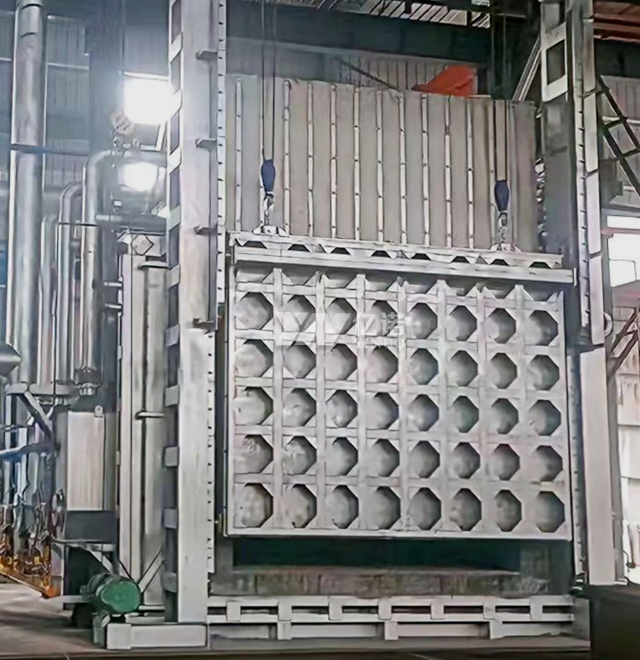
The Car Bottom Furnace Annealing Large Workpiece design accommodates asymmetrical shapes and varying thicknesses. Strategic placement on the reinforced bogie hearth ensures proper airflow circulation around irregular contours.
Electric hoist-driven furnace doors lift at 4–6 m/min, providing unobstructed access for overhead crane positioning. Maximum bogie travel stroke allows complete extraction from the chamber for safe workpiece arrangement.
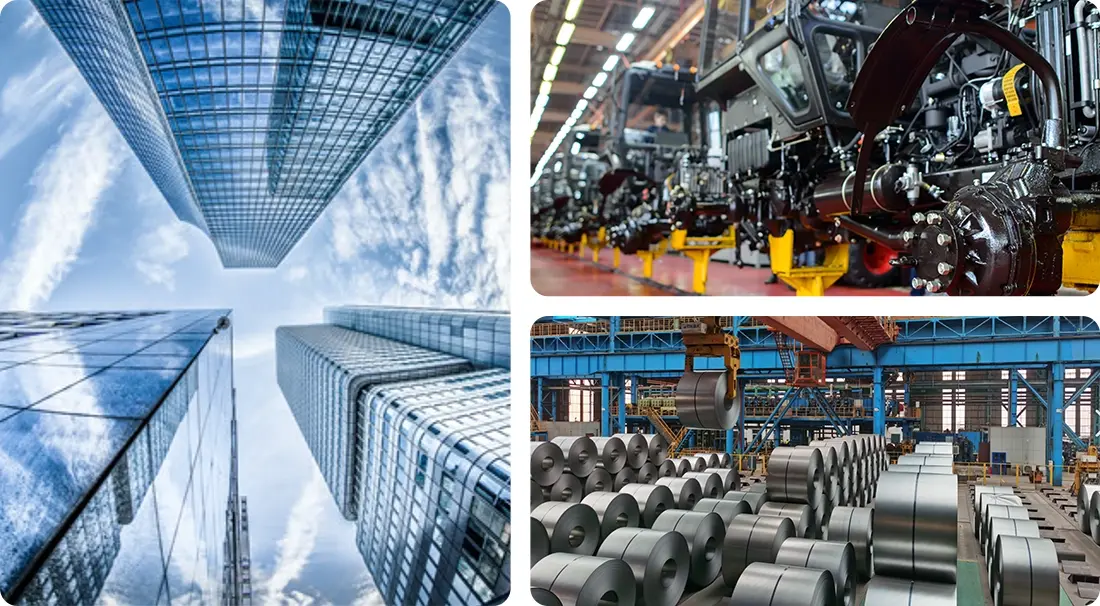
Industry Applications for Car Bottom Furnace Annealing Large Workpiece
Mining & Heavy Machinery
In an effort to prevent field failures, perfect grain refinement is required for processing big crusher housings and gear blanks. Our furnace provides the deep-core thermal penetration necessary for components used in high-impact situations.
Energy and Wind Power
The dimensional stability needs to be accurately controlled for annealing big diameter wind turbine main shafts and steam turbine rotors. The device can withstand extreme lengths and weights and provides uniform heat distribution for long soak durations.
Marine and Shipbuilding
The automobile bottom design is able to cope with asymmetrical geometries, which is an advantage to massive rudder stocks and engine crankshafts. Uniform heat-soaking ensures uniform material characteristics throughout complicated cross-sections.
Quality Control Standards
We subject our product systems to a rigorous performance testing before delivery. Temperature Uniformity Surveys (TUS) and System Accuracy Tests (SAT) ensure compliance with international standards including AMS 2750F and NADCAP requirements.
Once the process is done, inspectors repeat Brinell or Rockwell hardness tests. The aim is to confirm the softening happened evenly. Grain size and phase distribution were checked with metallography, and the microstructure results backed them up.
Methods like Ultrasonic Testing (UT) and Magnetic Particle Inspection (MPI) belong to Non-Destructive Testing. They confirm one thing. No internal thermal stress has caused micro-cracking during heating or cooling cycles on a Car Bottom Furnace Annealing Large Workpiece.
FAQ
Q: How do you stop oxidation on workpieces during annealing?
A: The car perimeters get sealed with sand or with water. Where the job needs it, we add nitrogen or argon protective atmospheres so less scale forms. That protective environment stops surface degradation, and heat transfer efficiency stays where it was.
Q: What is the top heating rate for oversized parts?
A: Heating rates stay tightly controlled between 50°C and 200°C per hour, based on cross-sectional thickness. That avoids thermal shock and internal cracking in massive workpieces. Those parts need gradual temperature changes.
Q: Can your furnace handle asymmetrical loads?
A: Yes. The car hearth has extra reinforcement for eccentric loading. We use careful placement and support blocks. Air then flows properly around irregular shapes without obstruction.
Q: In large chambers, how do you confirm the temperature is even?
A: 9-point or 15-point thermocouple testing during Temperature Uniformity Surveys (TUS) does the check. The survey maps the whole work zone volume. That confirms heat is spread evenly.
Q: During long cycles, what protections cover a power failure?
A: Emergency PLC backups are part of our systems. So is a manual drive option for the bogie. Data logging records the full set of cycle parameters. From that you can tell whether soak time requirements were held to industry standards.
Partner with a Proven Manufacturer
Contact our technical team at info@yinuofurnaces.com for customized solution development and detailed specifications for Car Bottom Furnace Annealing Large Workpiece.