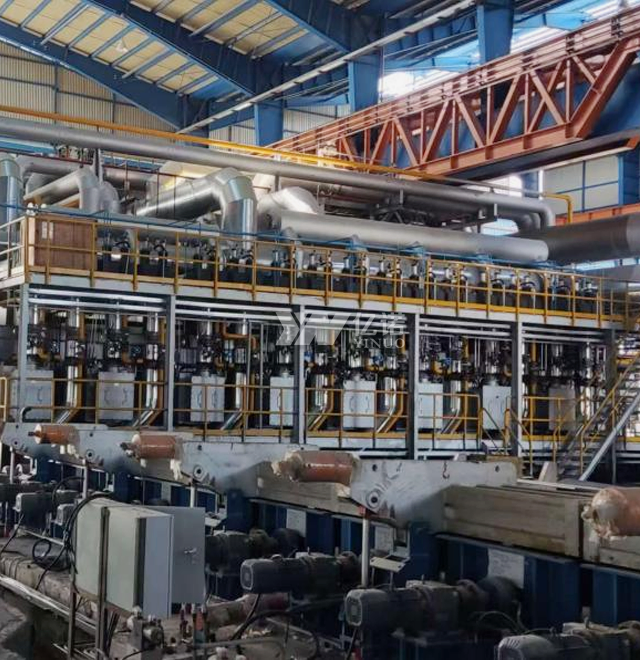
Roller Hearth Furnace Tempering Alloy Steel – Continuous Heat Treatment Solution for High-Performance Materials
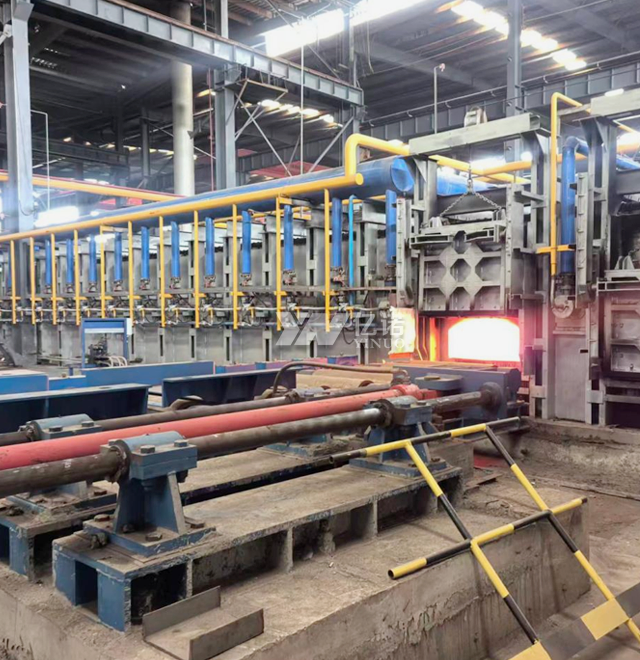
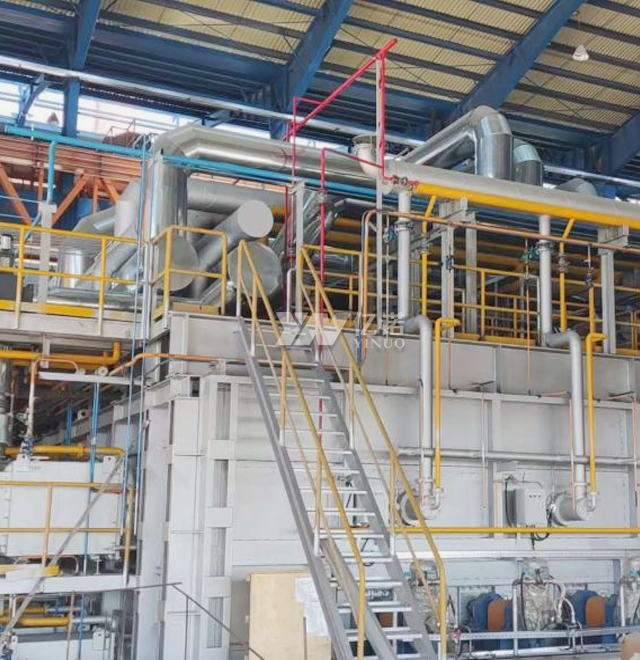
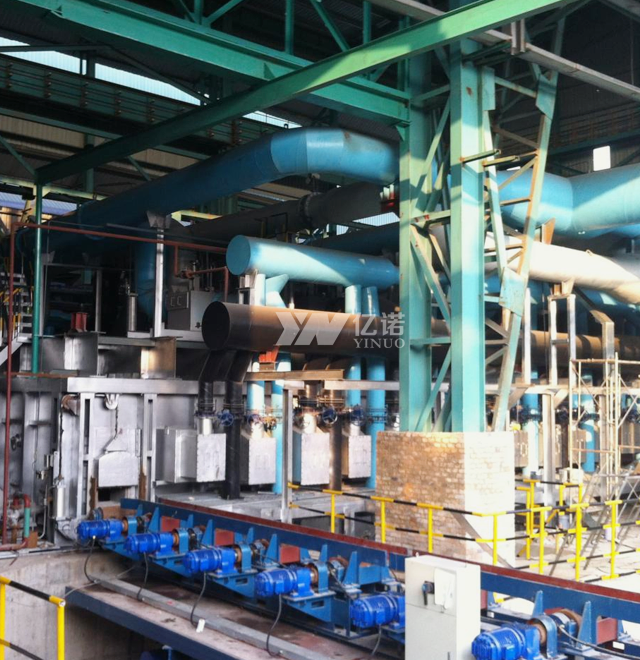
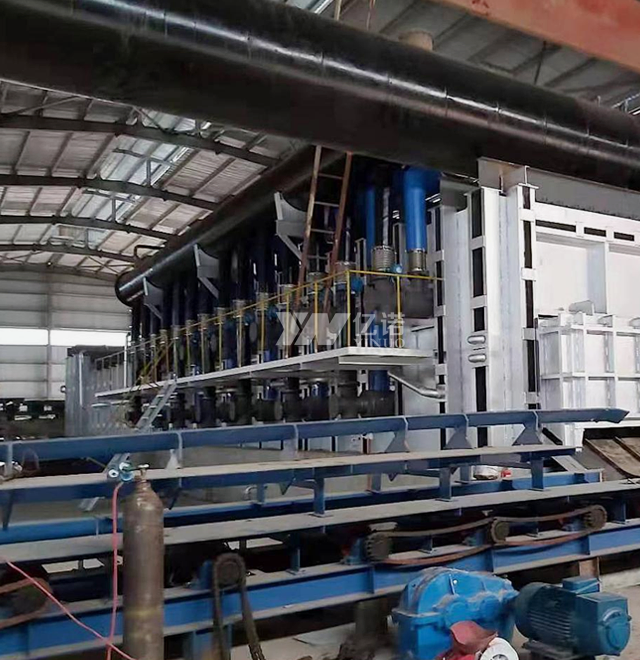
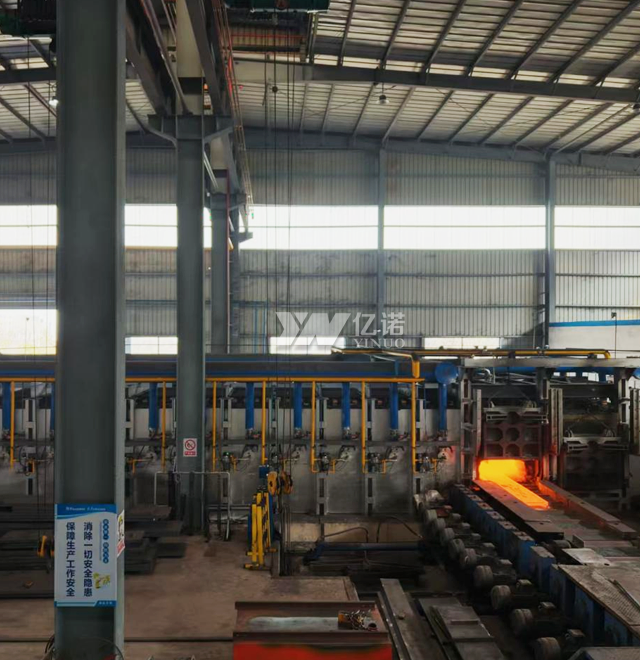
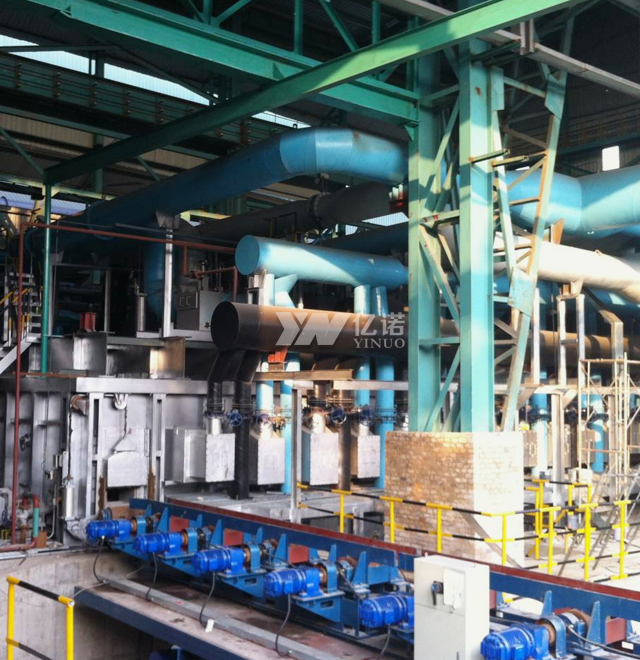
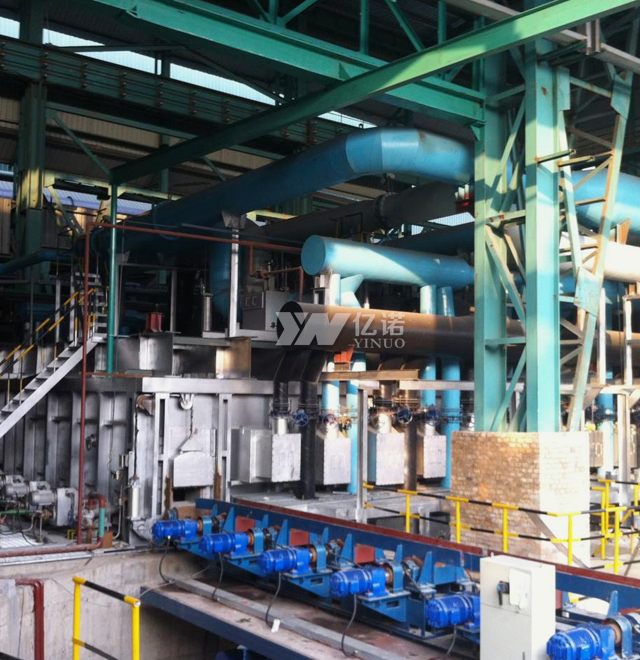
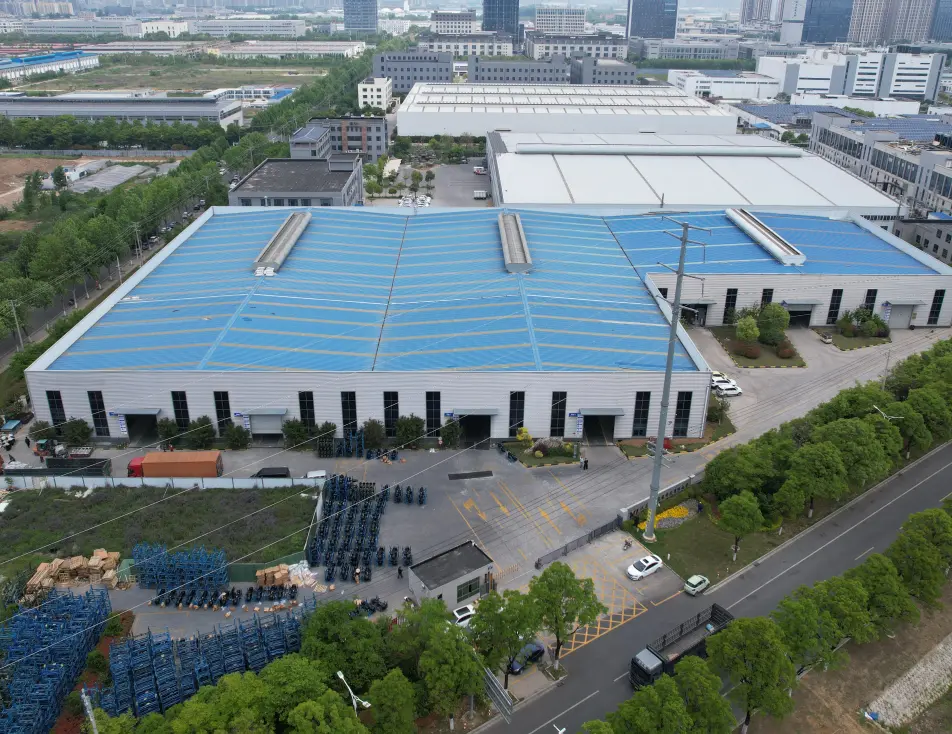
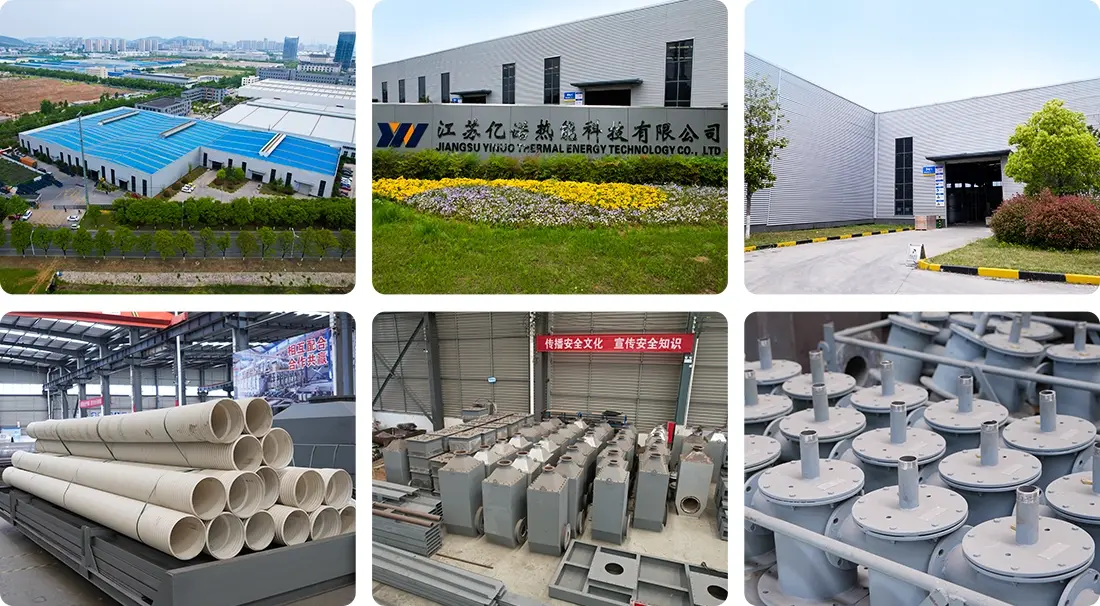
Our company, JIANGSU YINUO THERMAL ENERGY TECHNOLOGY CO., LTD, engineers advanced Roller Hearth Furnace Tempering Alloy Steel systems. Each one is built to give your critical parts the exact mechanical properties they need. Heating chambers can be set up to match the job. Insulation is made from several composite layers. Across the heating zone, temperature holds within ±8–12℃. Rated working temperatures run from 600–1200℃, and PID control keeps accuracy at ±3℃. Quenched alloy steel comes out as tempered martensite, and it comes out the same way every run. We work from a 20,000㎡ production facility with 80 million yuan in fixed assets. Over 100 technical professionals are on the team. Design through commissioning is handled by us, start to finish.
What is steel?
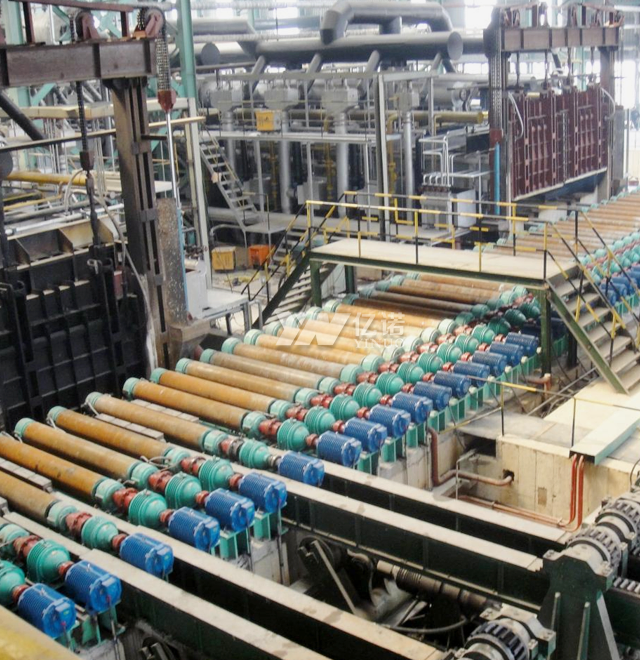
This is a continuous heat treatment process. Alloy parts that were quenched earlier move through a furnace on motorized rollers, and the furnace environment is controlled to a fine degree. Steel is reheated to a point below its critical transformation point (Ac1). Brittle martensite then turns into a tempered structure. Strength and toughness end up balanced.
Batch tempering systems bring problems, and this process takes them away. Hardness that changes from part to part, decarburization at the surface, and slow manual handling all disappear. Continuous material flow does part of that work. The atmosphere control does the rest. Long bars, tubes, and plates get the same thermal treatment throughout. Static furnaces tend to warp or distort the load. With this setup that does not happen.
Every section of your alloy steel sees the same time-temperature cycle. That is what the roller hearth layout gives you. A motorized conveyor keeps the material moving forward at a steady rate. Heating is split into several zones, so the thermal treatment steps up in stages. Throughput stays high. And the metallurgical integrity that heavy-duty industrial work calls for is still there.
Technical Specifications
| Parameter |
Specification |
| Effective Heating Chamber Size |
Customizable according to production demands |
| Overall External Dimension (L × W × H) |
All sizes supported, fully customized |
| Furnace Lining Structure |
Multi-layer composite heat insulation lining |
| Trolley Bearing Surface |
Flat high-temperature refractory castable platform |
| Furnace Door |
Integral sealing with silicon-aluminum fiber strips |
| Rated Working Temperature |
600–1200℃ optional |
| Temperature Uniformity |
±8–12℃ in heating zone |
| Temperature Control Accuracy |
±3℃ with PID automatic control |
| Maximum Heating Speed |
20–80℃/min, program curve adjustable |
| Furnace Surface Temperature |
≤55℃ under normal operation |
| Customization |
Available based on customer requirements |
Key Technical Properties
Your tempered alloy steel achieves strong mechanical characteristics through our precisely controlled thermal process. The Roller Hearth Furnace Tempering Alloy Steel system delivers yield strength optimization while enhancing fracture toughness and reducing internal residual stresses that compromise component reliability.
Protective atmospheres inside our furnaces come from nitrogen-hydrogen or endothermic gas mixtures. Carbon potential stays neutral in that environment. Oxidation and decarburization cannot get a hold, so surface integrity holds up through the whole tempering cycle. Out comes a homogeneous tempered sorbite structure. Tensile strength sits around 800-1200 MPa, set by the alloy grade, and elongation stays strong for dynamic loading work.
Temperature uniformity within tight tolerances comes from multi-zone PID control. Thermal energy spreads evenly across the heating chamber, thanks to high-velocity burners. Transformation then stays consistent right through your material's cross-section. That precision removes the hardness gradients which cut performance in critical assemblies.
Manufacturing Advantages
Fast heating speeds up output. At the same time, oxidation and decarburization losses go down. Controlled heat exposure keeps surface damage in check. You get less raw material waste. Forging dies last longer too.
Even heating keeps the surface and core of the workpiece close in temperature. Little difference shows between them. Our system controls temperature with high precision. It gives a steady microstructure. Weak spots that cause early service failure are removed.
A strong workshop environment makes work conditions better for staff. That raises operational standards at your facility. During operation, the furnace keeps surface temperatures at ≤55℃. Full insulation lowers ambient heat exposure. Energy use drops too.
Your production requirements come first. Every system our engineers build starts from them. Parts come in different shapes, so chamber dimensions can be changed to fit. Heating curves are programmable as well, which lets them match other alloy compositions and the mechanical properties you are after.
Roller Hearth Furnace Tempering Alloy Steel Quality Control Standards
Metallurgical integrity gets checked at every stage through our quality assurance protocols. Hardness mapping with Brinell and Rockwell units is one of the main inspection methods. It runs across component cross-sections and shows whether results stay consistent. For demanding applications, Charpy V-notch impact testing at sub-zero temperatures validates the toughness requirements.
Scanning electron microscopy lets us analyse the microstructure. Retained austenite or unwanted precipitates that would hurt performance show up here. Thermal processing can also introduce distortion, and laser straightness measurement verifies that it has not. Decarburization depth testing per ASTM E1077 then confirms the atmospheric control worked.
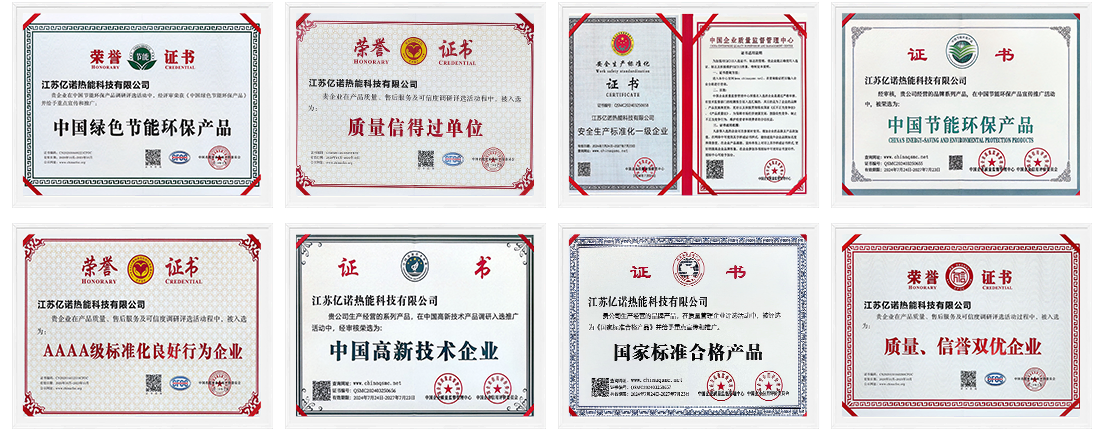
Checks like these are thorough. They make sure your tempered parts meet standards such as ASTM A29 and EN 10083. Before shipment, our inspection department confirms the parts meet national and industrial quality requirements. For critical applications, documented traceability backs this up.
Industrial Applications
In the fabrication of precision steel tubes we use our continuous tempering equipment for intermediate and final treatment of cold drew tubes. The method is able to provide ductility for high pressure hydraulic applications without sacrificing dimensional accuracy.
Automotive fastener production involves roller hearth systems for the continuous processing of steel wire coils in safe atmospheres. This prevents decarburisation of safety important bolts, whilst maintaining the best forgeability for the subsequent cold forming procedures.
Our furnaces are used in the aerospace and energy industries for stress relieving big components where flatness is critical. The continuous operation makes it ideal for automated production lines, with less manual handling and reduced danger of damage in transit.
Heavy machinery makers use long alloy bars made of Roller Hearth Furnace Tempering Alloy Steel for drive shafts and structural parts. Heat treatment stays uniform, so hardness does not vary. Varying hardness can cause uneven wear, or early fatigue failure under high loads.
FAQ
Q: How does the roller hearth design prevent warping of long alloy bars?
A: Precision alignment and variable frequency drives synchronize roller speeds, while staggered heating zones manage thermal expansion linearly to prevent distortion.
Q: Can different alloy grades be processed simultaneously?
A: While zone separation allows mixed processing, grouping grades with similar transformation temperatures maintains optimal soaking time integrity for best results.
Q: How do cooling rates after tempering affect the part?
A: Some alloys, chromium-nickel steels among them, are prone to temper brittleness. Cooling them in a controlled way, with mist or forced air, stops that from happening. The toughness gained in tempering stays intact.
Q: How is surface oxidation minimized?
A: Oxygen has no way in once the furnace chamber holds a positive pressure of nitrogen or cracked ammonia. No scale forms. Decarburization does not occur either.
Q: Does this process comply with aerospace quality standards?
A: Yes. Lines built today get checked with temperature uniformity surveys and system accuracy tests. That keeps them in line with NADCAP and AMS2750, which is what aerospace work calls for.
Contact Us for Custom Solutions
Our engineering team will design a Roller Hearth Furnace Tempering Alloy Steel system matching your exact specifications. Contact us at info@yinuofurnaces.com to discuss your production requirements.