Annular Furnaces for Industrial Heating – High-Efficiency Rotary Hearth Solution for Continuous Metal Processing
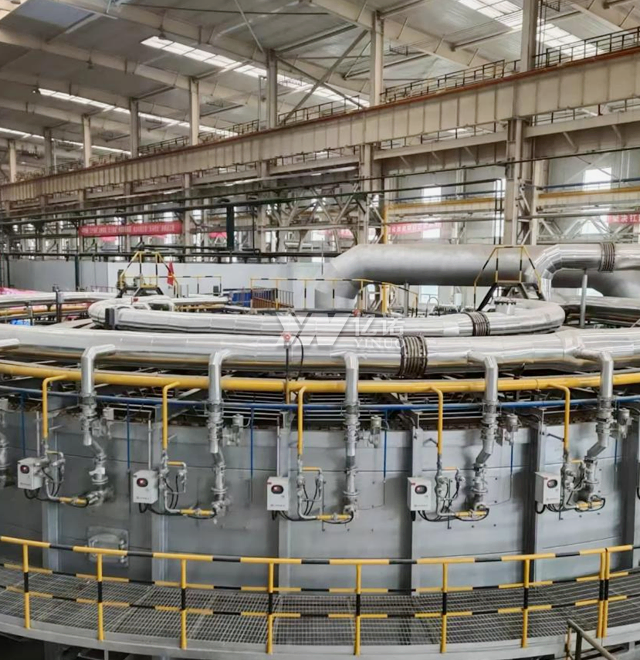
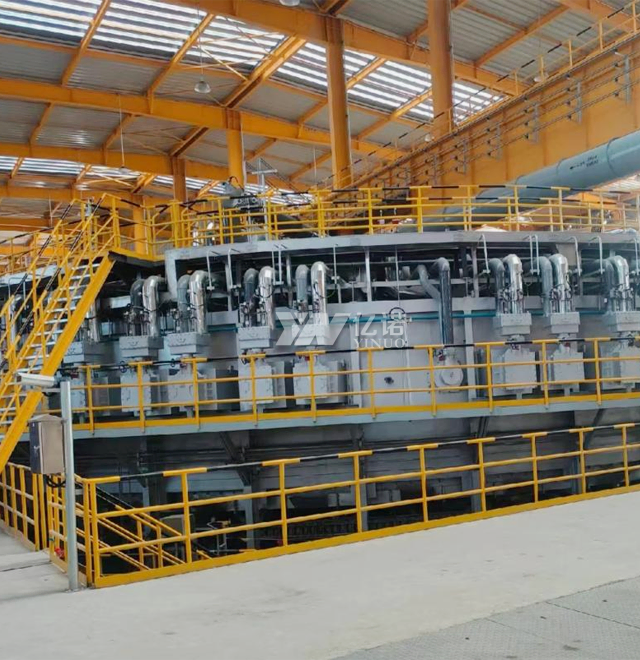
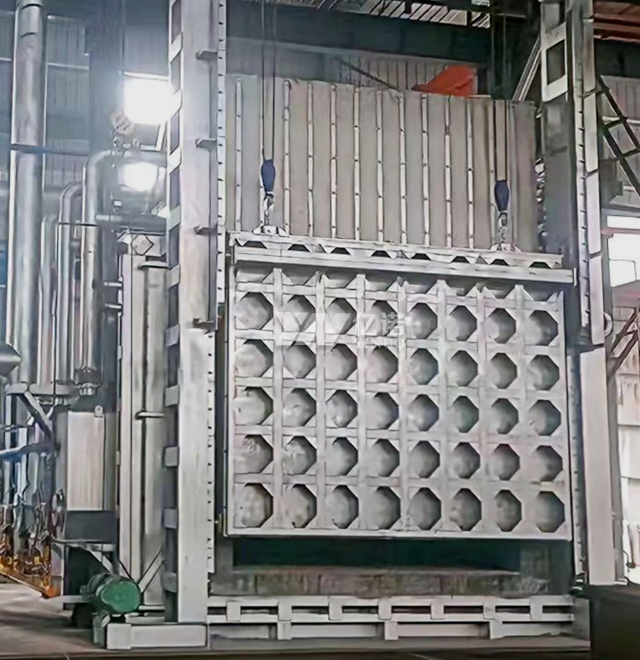
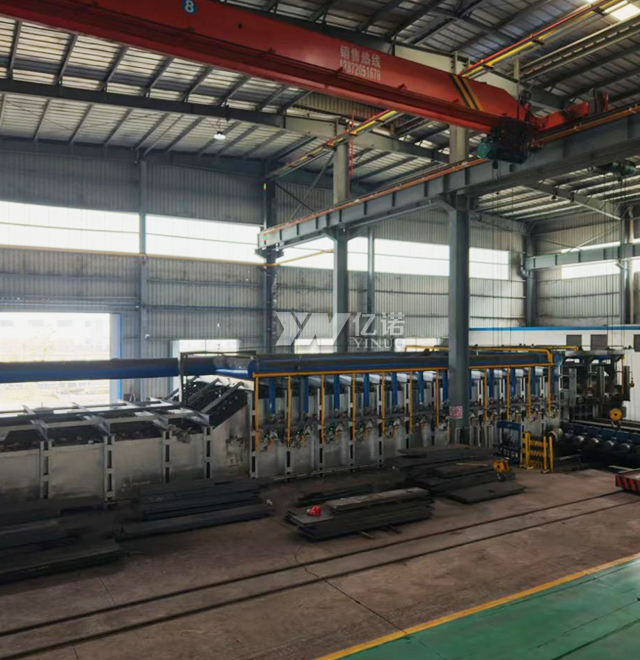
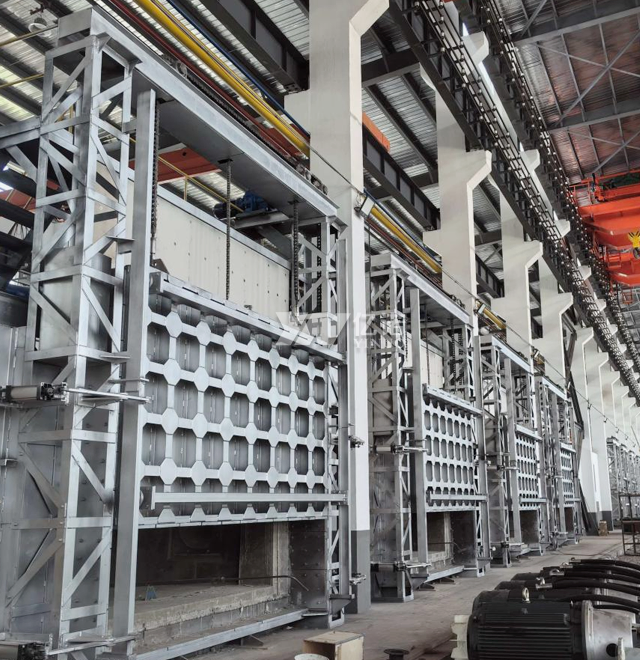
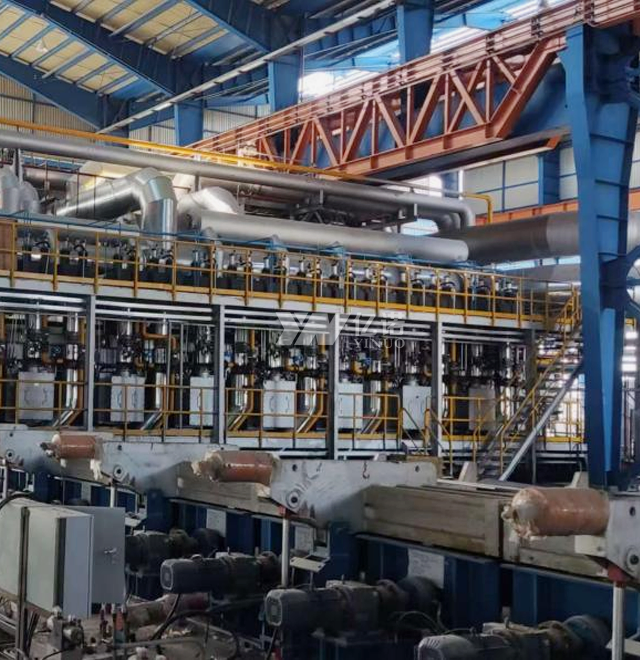
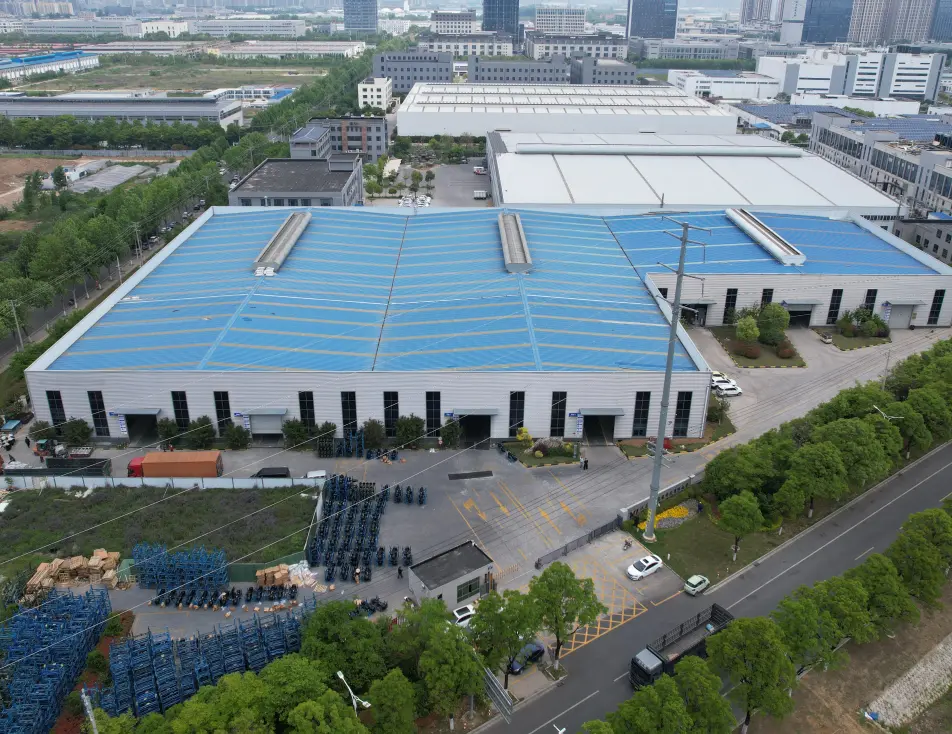
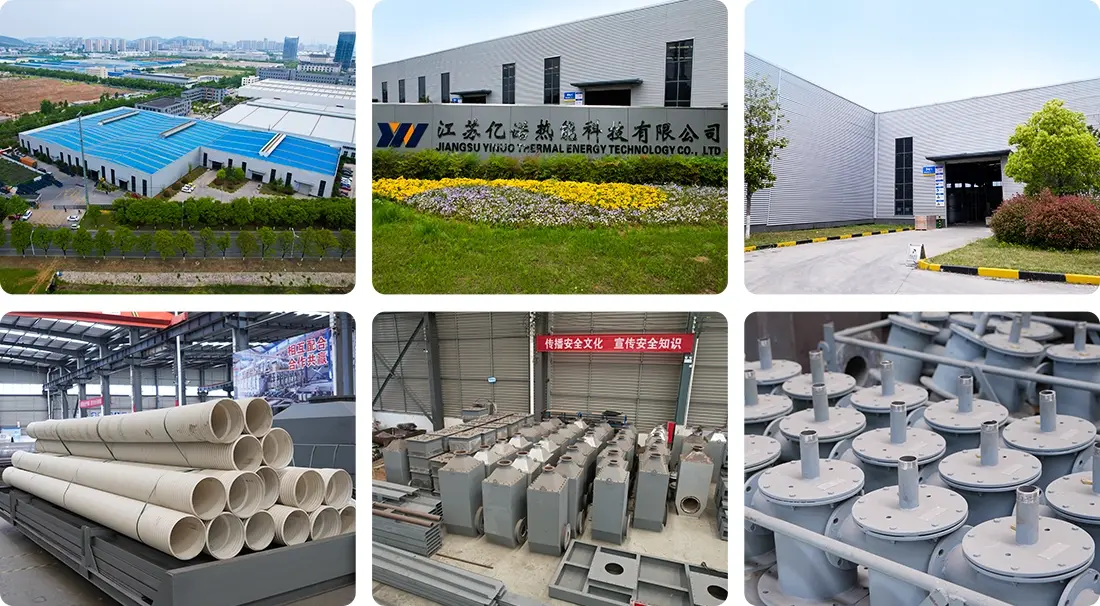
JIANGSU YINUO THERMAL ENERGY TECHNOLOGY CO., LTD builds Annular Furnaces for continuous heating work. Forging shops run them. So do steel pipe plants and heat treatment lines. Our production site covers 20,000㎡ and holds 80 million yuan in fixed assets. More than 100 skilled people work there. Furnace bottom specific output runs from 150–250 kg/(m²·h) on small and medium units, and from 350–450 kg/(m²·h) on large systems. In a conventional setup thermal efficiency reaches 55%–65%. Add regenerative combustion and that number climbs to 70%–75%. The working layer is built from high-alumina bricks with Al₂O₃ content ≥65%. Behind it sits aluminosilicate fiber insulation, thermal conductivity = 0.12 W/(m·K). Both keep thermal performance steady and stretch refractory life.
What Makes Our Rotary Hearth Furnaces Stand Out?
Billets sit in separate slots on our rotating hearth furnaces. That arrangement shortens each heating cycle. A run usually takes 40 to 90 minutes. In every thermal zone the temperature stays within ±15°C. Control that tight gives even metallurgical properties in high value parts.
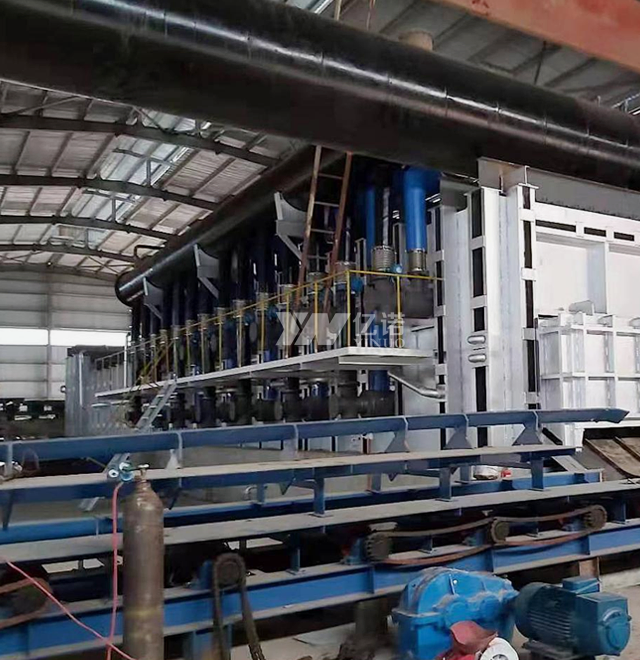
Pusher type furnaces let billets arch up. The rotational transfer system does away with that old problem. Should a mechanical fault hit, workers clear the stuck workpieces fast. The rest of the line keeps running. Downtime drops, and production continuity holds.
You get the benefit of decoupling charging and discharging locations for your production. This layout utilises the floor space to the most and allows exact control of the residence duration of each workpiece and hence uniform heating irrespective of difference in billet size.
Core Industrial Applications
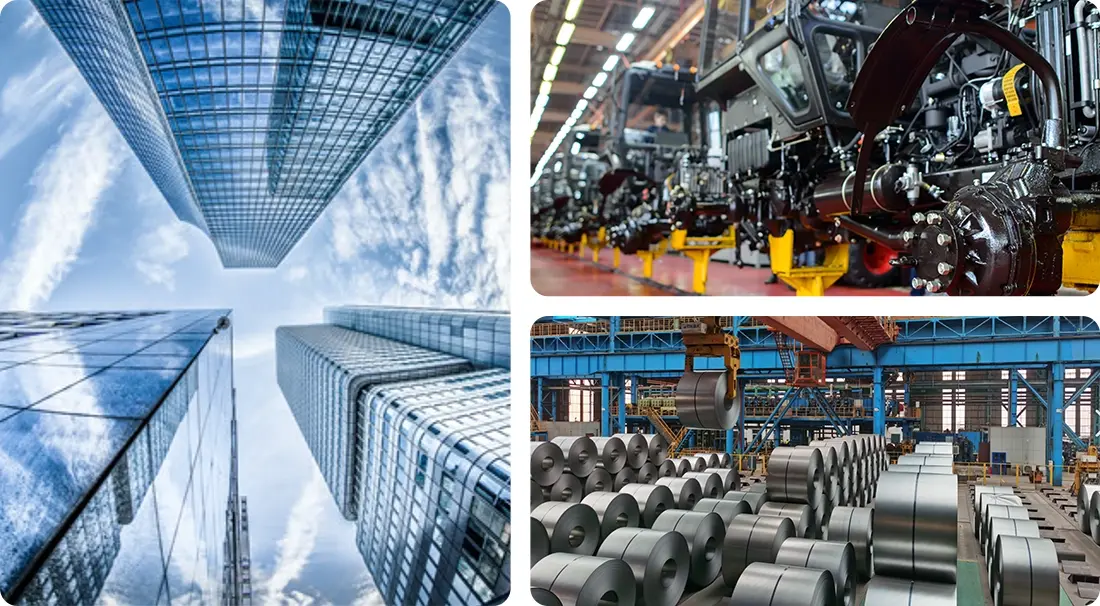
Seamless Steel Pipe Manufacturing
Exact piercing temperatures are needed when the round billets are heated. Wall thickness stays even when the heat is spread evenly, and that has a direct effect on final product quality. The furnaces we make deliver steady temperature profiles. Continuous pipe production depends on those profiles.
Heavy Forgings & Aerospace Parts
For large diameter ring forgings and turbine discs the high load capacity without mechanical interference is required. The rotary hearth design allows for a broad spectrum of shapes and preserves structural integrity throughout continuous 24/7 operation cycles.
Manufacture of Railroad Wheels and Axles
High carbon steel components need to be soaked in a regulated way for structural integrity. The systems give the exact thermal treatment for components of high-speed rolling stock according to the severe safety requirements.
Technical Specifications
| Parameter |
Specification |
| Furnace Bottom Specific Output |
Small & medium furnaces (ring width 1.5m): 150–250 kg/(m²·h)
Large furnaces (ring width 4m): 350–450 kg/(m²·h) |
| Thermal Efficiency |
Conventional furnace: 55%–65%
Regenerative combustion system: 70%–75% |
| Operating Temperature Range |
1000°C – 1350°C |
| Working Layer Material |
High-alumina bricks (Al₂O₃ content ≥65%) |
| Insulation Layer Material |
Aluminosilicate fiber (thermal conductivity = 0.12 W/(m·K)) |
| Temperature Uniformity |
±15°C deviation |
| Heating Cycle |
40 – 90 minutes (standard) |
| Customization |
Available based on customer requirements |
Advanced Engineering Features
Thermal control systems we build use high-velocity burners with automated zone control. Oxygen potential drops. Residence time in critical temperature ranges gets shorter too. Less decarburization forms on the surfaces of your workpieces.
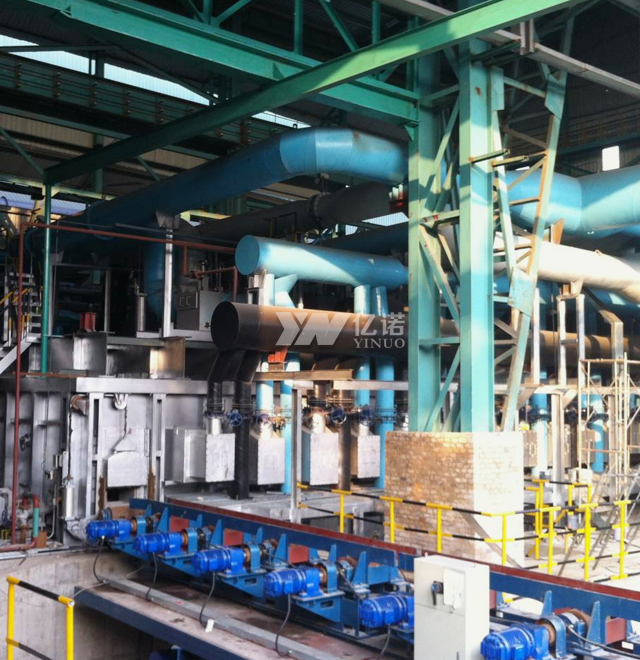
Modern recuperators use exhaust flue gases to preheat combustion air. Fuel consumption drops by a large margin thanks to that heat recovery step. Operating temperatures hold steady through production runs.
Water seal systems provide strong gas-tight environments compared to traditional sand seals in Annular Furnaces. Though requiring scheduled maintenance, they deliver essential pressure control and dramatically reduce scale formation on heated materials.
Quality Assurance Process for Annular Furnaces
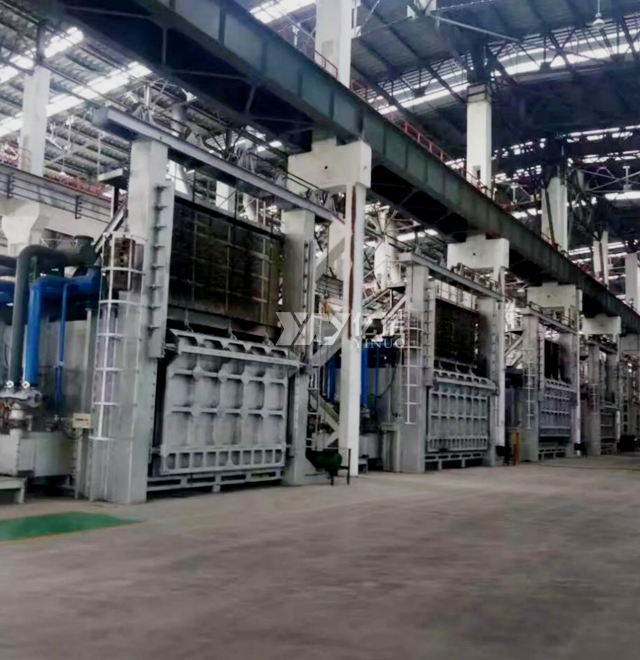
Before a furnace ships, it gets inspected against national and industry standards. Hearth concentricity and levelling are checked by our quality inspection team. That way, mechanical jamming during operation is avoided.
Temperature Uniformity Surveys hold ±5°C precision across every heating zone. Each thermocouple and control instrument is verified in the System Accuracy Test. The result is accurate thermal processing for the applications you care about.
Infrared thermography helps you find possible cold spots or heat leaks in refractory linings. Burner combustion efficiency testing confirms NOx emission levels are where they should be. That makes it easier to meet your environmental compliance requirements.
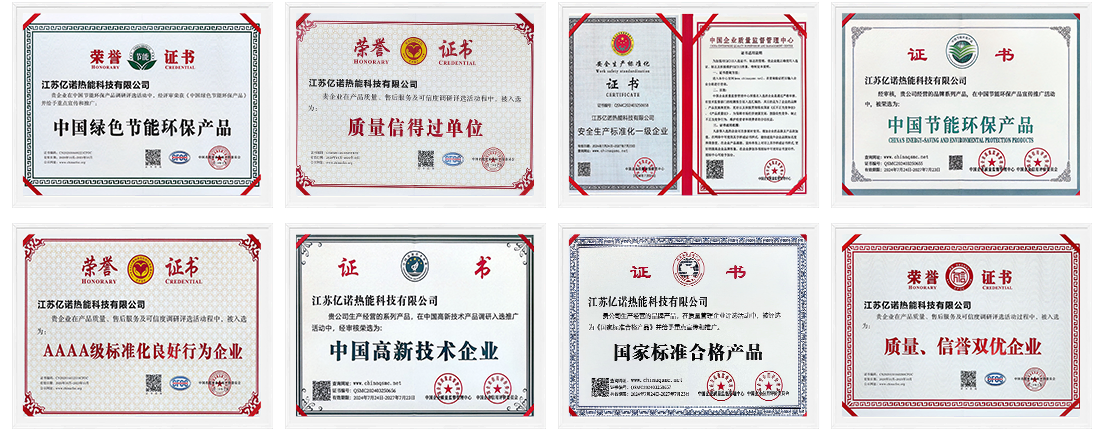
Complete Service and Support
We provide integrated solutions from initial furnace design to manufacturing, installation, commissioning and project management. Our engineering staff is multi-disciplinary and can help you with your distinct creation based on your particular heating needs.
Our team of mechanical engineers, automatic control experts and quality inspection specialists for Annular Furnaces work together to make sure all systems meet your performance requirements. Post installation assistance includes operator training, and planned maintenance plans.
FAQ
Q: How does your rotary hearth system minimize decarburization?
A: High-velocity burners combined with automated zone control reduce oxygen potential. Shortened residence time in critical temperature ranges preserves carbon content at workpiece surfaces.
Q: What advantages do water seals offer?
A: Water seals create strong gas-tight environments essential for pressure control. They reduce scale formation significantly, though they require more frequent maintenance compared to sand seal configurations.
Q: Can different billet sizes be heated simultaneously?
A: Yes. The rotary hearth design allows individual spacing and timing adjustments for each workpiece. This flexibility surpasses the limitations of pusher-type furnace systems.
Q: How is energy recovered in your systems?
A: Most of our modern units utilize recuperators that capture exhaust flue gas heat. This preheats combustion air, reducing fuel consumption by 15%–25% depending on operational parameters.
Q: How long does a refractory lining usually last?
A: Expect 5 to 10 years from a high-alumina castable lining or a modular fiber one, as long as you keep up with maintenance and follow the right heating and cooling steps. A thermal audit once a year checks that the lining is still sound. It also helps you plan when maintenance is due.
Contact Us for Custom Solutions
Ready to enhance your heating processes with Annular Furnaces? Contact our engineering team at info@yinuofurnaces.com to discuss your specific requirements and receive a customized furnace solution.