Buying a new furnace to heat billets, tube rounds, or forging blanks is a long-term investment, and the incorrect decision may impact fuel expenses, product quality, and downtime for many years. The annular furnace or rotary hearth furnace is typically used for round billets and tube blanks because the revolving hearth rotates the material in a round motion through the heating zones. However, not all annular furnaces are the same, and the parameters on a quote do not necessarily indicate what matters most in everyday operation. This article takes you through the characteristics worth evaluating, including hearth output, thermal efficiency, refractory design, and transfer mechanisms, so you can evaluate which configuration matches your facility.
Understanding How an Annular Furnace Works
The Rotating Hearth Principle
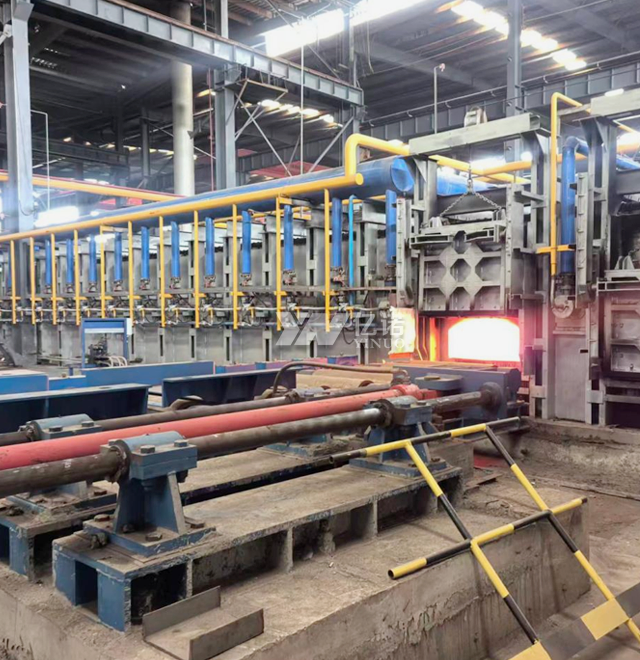
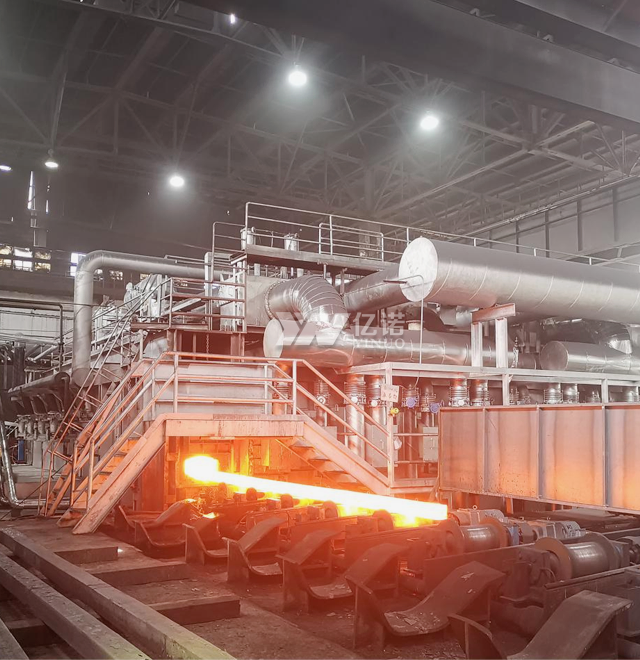
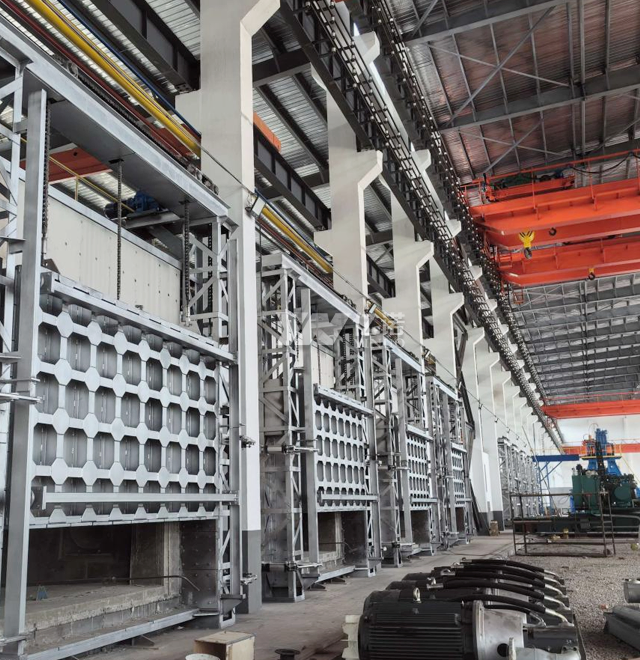
The circular furnace has a ring-shaped hearth which gently revolves around a central axis, with burners heating the chamber from above and from the sides. Billets are charged at one location, pass through preheating, heating, and soaking zones as the hearth rolls, and are discharged near the charging spot. This circular circuit puts the loading and unloading stations near together, improving material handling and using less floor space than a long straight furnace. An annular furnace provides a compact architecture and a smooth, continuous flow of heated material for operations making seamless tubes or forged rounds.
Separated Billet Layout and Heating Speed
One of the most important features of an annular furnace is that billets may be put on the hearth with spaces between them, rather than being packed tightly. Such a distinct arrangement exposes more of the surface of each billet to radiant heat and so increases the rate of heating and reduces the time required to achieve rolling temperature. The usual heating cycle is 40-90 minutes, and the temperature uniformity variation is kept within ±15 °C. If you look at any annular furnace, ask yourself how the spacing of the billets was done. Good spacing is what enables you to heat quickly without causing inconsistent temperatures over the workpiece.
Rotary Transfer Versus Pusher-Type Furnaces
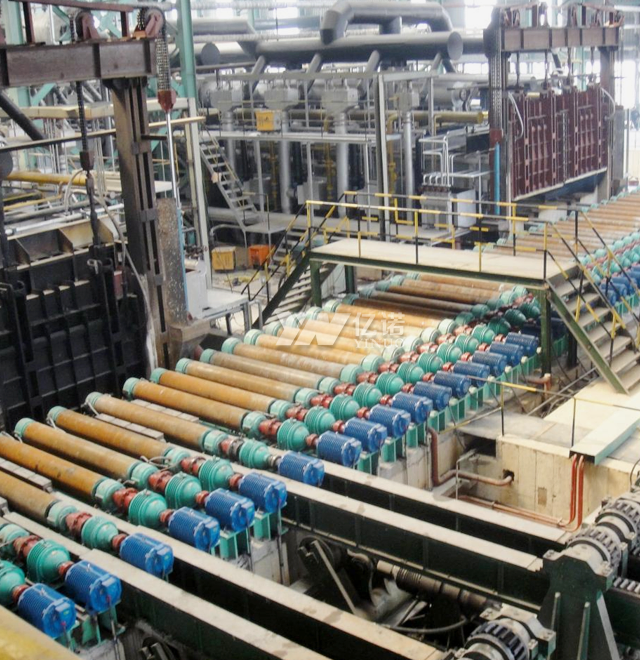
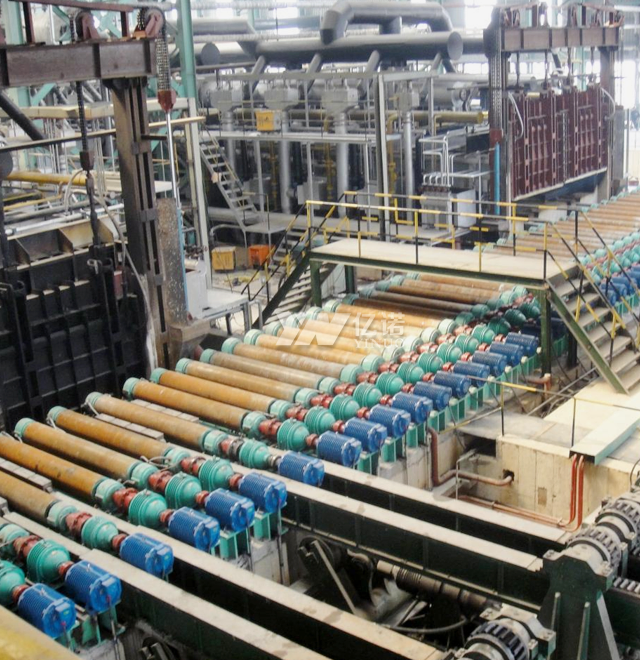
Pusher-type furnaces press the billets together along a fixed hearth, which may generate arching faults and even jams that are difficult to remove. The difficulty is avoided by a rotational transfer system, where the billets are placed separately on a moving hearth and do not push against each other. In case of a malfunction downstream, clogged workpieces may be promptly removed, limiting wasted production time. This is a real plus that many consumers miss when they compare an annular furnace against a pusher design. Reliable transmission and rapid recovery from faults are of critical significance for plants which cannot afford protracted interruptions.
Output and Efficiency Features to Compare
Furnace Bottom Specific Output
Specific output is a measure of how many kilos of steel per square meter of hearth the furnace can heat every hour, and it is one of the clearest means of comparing sizes. A small to medium annular furnace with a ring width of 1.5 m generally provides 150–250 kg/(m²·h) while a big annular furnace with a ring diameter of 4 m achieves 350–450 kg/(m²·h). These numbers provide you with a way to estimate the hearth area you require for your goal tonnage. In defining an annular furnace, begin with the desired hourly production and add a sufficient margin, such that the furnace is neither large and wasteful nor undersized and continuously overloaded.
Thermal Efficiency and Regenerative Combustion
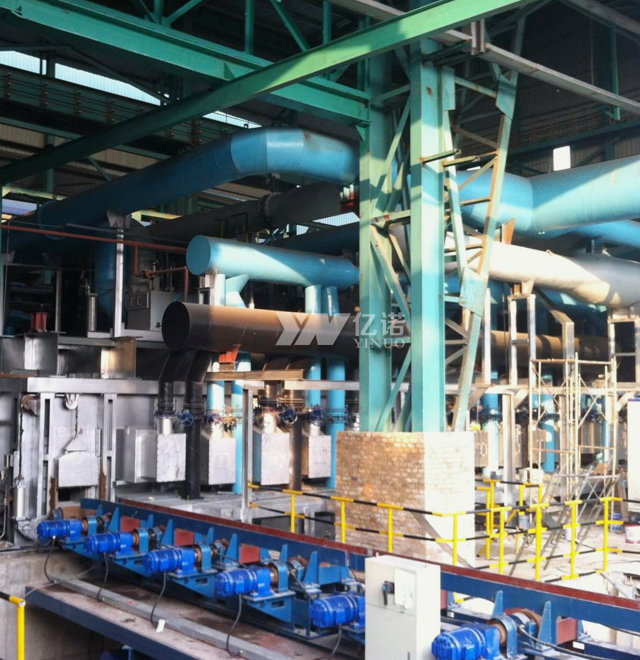
Thermal efficiency has a direct impact on fuel cost, and the difference between designs might be substantial. The thermal efficiency of a standard annular furnace is roughly 55% to 65%. The thermal efficiency of a furnace with a regenerative combustion system might be 70% to 75%. Regenerative burners may retain heat from the exhaust gases and transmit it back to the entering combustion air, which means less fuel has to be used to attain the same temperature. For facilities that work many hours per week, the added cost of a regenerative annular furnace frequently pays for itself in reduced fuel consumption, lower exhaust temperatures, and fewer pollutants.
Temperature Uniformity and Heating Cycle
Even heating is important for downstream quality, particularly when rolling or piercing tube blanks. In an annular furnace, the usual heating cycle for billets of different diameters and steel grades varies from 40 to 90 min, and the temperature uniformity variation is kept in the range of ±15 °C. Constant billet temperature minimizes wall thickness fluctuation, enhances piercing performance, and reduces the incidence of surface flaws. When comparing bids, inquire how the burner layout, zone control, and hearth speed work together to provide this consistency, since a successful annular furnace relies on balanced design rather than any single component alone.
Refractory and Structural Design
High-Alumina Brick Working Layer
The working layer is the part of the lining that faces the flame and the hot billets, so it must withstand high temperature, thermal shock, and scale attack. Our annular furnace uses high-alumina bricks with an Al₂O₃ content of at least 65%, a material known for good strength at temperature and resistance to erosion. Using quality bricks in this layer extends the interval between relining jobs and reduces unplanned shutdowns. When buying an annular furnace, request the refractory specification in writing, including alumina content and brick grade, since this is a place where cost-cutting can quietly shorten the life of the furnace.
Aluminosilicate Fiber Insulation
Behind the working layer, the insulation layer limits heat loss through the furnace wall. Our annular furnace uses aluminosilicate fiber with a thermal conductivity of 0.12 W/(m·K), a low value that keeps the outer shell cooler and saves fuel. Good insulation also improves workshop comfort and makes operation safer for staff working near the furnace. The combination of a hard-wearing brick face and a lightweight fiber backing gives a balanced lining that resists wear while holding heat inside the chamber. For any annular furnace, the quality and thickness of insulation directly influence long-term operating costs.
Structure, Sealing, and Maintenance Access
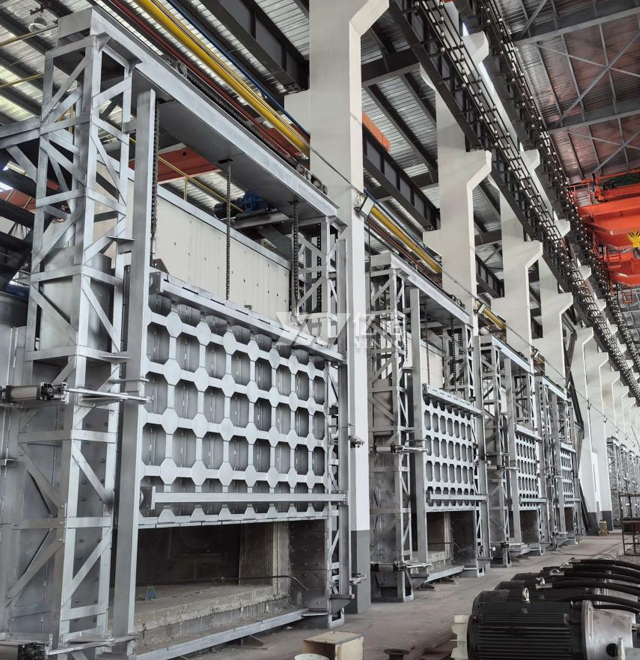
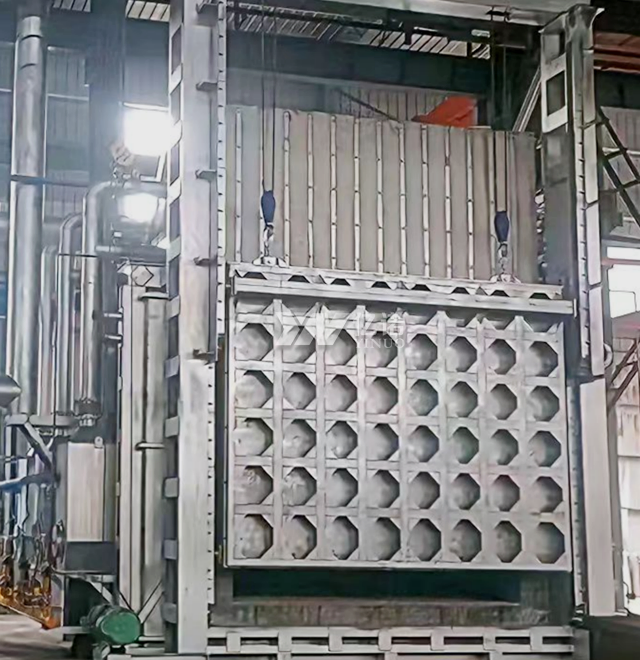
The rotating hearth must be sealed against the furnace walls to prevent cold air from entering and hot gas from escaping, and this sealing system is often where maintenance problems start. Water seals or sand seals are common choices, and each has its own upkeep requirements. Access doors, inspection ports, and hearth repair openings should be planned so that crews can service the furnace without long cooling periods. When you select an annular furnace, review the seal design and maintenance plan together with the refractory specification, because a strong lining is only effective if the structure around it keeps the atmosphere stable.
Choosing the Right Annular Furnace Supplier
Sizing and Customization
A decent annular furnace is seldom a standard item, since the billet size, production objective, and area available vary from plant to plant. Customization as per the customer’s needs, such as ring width, hearth diameter, combustion system, and discharge configuration. Our experts may suggest an annular furnace that fits your operation rather than trying to shoehorn a common model into a bad fit by providing information on your billet size, steel grades, and hourly tonnage. Early technical discussion may also assist with site restrictions such as foundation depth, gas supply and overhead crane clearance prior to design work being undertaken.
Full-Service Support from Design to Production
A furnace is only valuable when it is installed, commissioned and functioning at rated output. We are an integration firm of industry and commerce, which has design skills, has its own installation and commissioning specialists, and provides a comprehensive range of services from design to real manufacturing. Our wealth of export knowledge and foreign building skills enable international clients to deal with logistics and site challenges. That means no middlemen getting a cut of the price difference, just you and the team creating your annular furnace. That keeps pricing clear and communication swift.
Quality Control and Documentation
Equipment reliability is a function of systematic quality inspections. Our inspection department ensures the fulfillment of national and industry quality criteria before shipping, and documented traceability supports crucial applications. The annular furnace is to specification, supported by refractory certifications, burner test records and commissioning reports. When comparing vendors, inquire what documentation you will be provided with and how performance metrics such as thermal efficiency and temperature uniformity will be confirmed on site. Clear paperwork protects your investment and makes it easy to properly maintain the furnace during its service life.
Conclusion
The most significant qualities of the annular furnace are: specific hearth output, thermal efficiency, temperature homogeneity, quality of refractory materials, and a dependable rotating transfer mechanism. Regenerative firing may raise efficiency to 70%-75%, while high-alumina brick and aluminosilicate fiber extend lining life and cut heat loss. The selection of an integrated provider that can customize, install, and quality check without intermediaries reduces risk and expense. Compare these qualities to your specific billets and production objectives, and your annular furnace will serve your operation reliably for years.
FAQ
1. What is the specific output of an annular furnace?
Small and medium furnaces with a 1.5 m ring width reach 150–250 kg/(m²·h), while large furnaces with a 4 m ring width reach 350–450 kg/(m²·h).
2. How efficient is an annular furnace?
A conventional furnace reaches 55%–65% thermal efficiency, and a furnace with a regenerative combustion system can reach 70%–75%.
3. What is the typical heating cycle?
The standard heating cycle is 40 to 90 minutes, with temperature uniformity deviation controlled within ±15 °C.
4. What refractory materials are used?
The working layer uses high-alumina bricks with Al₂O₃ content of at least 65%, and the insulation layer uses aluminosilicate fiber with a thermal conductivity of 0.12 W/(m·K).
5. Why choose a rotary transfer design over a pusher furnace?
It eliminates the arching defects common in pusher furnaces and allows jammed workpieces to be cleared quickly after a breakdown.
Ready to Choose Your Annular Furnace? Contact Us Today
If you are comparing options for an annular furnace, our engineers can help you define the right hearth size, combustion system, and lining specification for your plant. JIANGSU YINUO THERMAL ENERGY TECHNOLOGY CO., LTD provides complete solutions from design to production, with direct pricing and proven export experience. Send us your billet dimensions, steel grades, and target output, and we will prepare a tailored proposal. Email us at info@yinuofurnaces.com to request a quotation or technical consultation and take the next step toward a more efficient heating line.
References
1. Trinks, W., Mawhinney, M. H., Shannon, R. A., Reed, R. J., & Garvey, J. R. (2004). Industrial Furnaces (6th ed.). John Wiley & Sons.
2. Tsuji, H., Gupta, A. K., Hasegawa, T., Katsuki, M., Kishimoto, K., & Morita, M. (2003). High Temperature Air Combustion: From Energy Conservation to Pollution Reduction. CRC Press.
3. Worrell, E., Blinde, P., Neelis, M., Blomen, E., & Masanet, E. (2010). Energy Efficiency Improvement and Cost Saving Opportunities for the U.S. Iron and Steel Industry. Lawrence Berkeley National Laboratory.
4. Schacht, C. A. (Ed.). (2004). Refractories Handbook. Marcel Dekker.
5. Ghosh, A., & Chatterjee, A. (2008). Ironmaking and Steelmaking: Theory and Practice. PHI Learning.
6. Wünning, J. A., & Wünning, J. G. (1997). Flameless oxidation to reduce thermal NO-formation. Progress in Energy and Combustion Science, 23(1), 81–94.